
Kouichi Sawada
(Fisheries Technology Institute, Japan Fisheries Research and Education Agency)
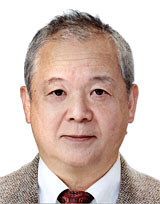
President of
Marine Acoustics Society of Japan
I am deeply honored to have been elected President of the Marine Acoustics Society of Japan (MASJ) for the 2025-2026 term, and I keenly feel the weight of the responsibility of managing this society. Moving forward, together with the newly elected vice presidents, Prof. Tomonari Akamatsu and Prof. Takenobu Tsuchiya, and with the board members and the secretariat, I will listen to the opinions of our members while striving to develop the field of marine acoustics and our society.
As stated in its articles of incorporation, the MASJ engages in activities aimed at “conducting projects related to academic research, dissemination, enlightenment, and the promotion of research and development related to ocean acoustics for people who have a broad interest in ocean acoustics, thereby contributing to the dissemination of ocean acoustics science and technology and promoting the advancement and development of science and technology in our country.”
The MASJ was initially established as a research group on July 10, 1973, and, after the general meeting in May of 1989, it became an academic society. Looking back on myself, in April of 1988, I completed my graduate studies and was assigned to the Acoustic Instruments Laboratory at the National Research Institute of Fisheries Engineering, which was part of the Fisheries Agency, and I believe I joined the MASJ around 1990 at the invitation of Prof. Masahiko Furusawa, who was the head of the Acoustic Group; so by the time I joined, the MASJ was already an academic society.
At that time, a joint Japan-US acoustic/ midwater trawl survey was underway in the international waters of the Bering Sea and, since I was a member of the acoustics team, I participated every year by equipping a chartered fishing vessel with the quantitative echo sounder system developed in Japan. The surveys we conducted in the Bering Sea not only estimated the current stock of walleye pollock but also collected target strength data related to the accuracy of the stock estimate. I presented the results at the meeting of MASJ and later had the opportunity to submit my work to the Journal of MASJ for the first time (Sawada, Furusawa, and Williamson, 1993, Volume 70).
As part of its efforts toward enlightenment and dissemination, the MASJ has published specialized books for beginners, including ‘Marine Acoustics – Basics and Applications’ in 1984. After a complete rewrite, the book was republished in 2004 as ‘Fundamentals and Applications of Marine Acoustics’ and is still being reprinted today. This book is also used as a textbook for technical seminars held annually, but over 20 years have passed since its publication, and revisions to the section on applications are needed. Therefore, starting in fiscal year 2025, we plan to establish a revision committee, set revision guidelines within the year, and aim for publication in 2028, the 55th anniversary of its initial publication.
I believe that this society enhances research by sharing insights and ideas with people of various ages through events like research presentations, and by receiving opinions from people with different perspectives. I am determined to work hard to make this society a place where attendees feel they can contribute and gain something beneficial. I am grateful for your support.
(9 December 2025)